|
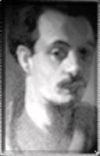
One of the best-selling books of the 20th century is a volume of prose poems on religion, death, love, work, and other subjects bound up with human existence. Entitled 'The Prophet', it was written by Khalil Gibran, an essayist, novelist, and mystic poet whose writings in both Arabic and English have influenced many readers.
Gibran was born at Bsharri, Lebanon, on Jan 6, 1883 After primary schooling in Beirut, he was taken by his parents to Boston in 1895. He returned to Lebanon in 1898 to continue his education. Back in Boston in 1903, he
published his first essays in the Arab immigrant newspaper The Emigrant. At this time he met Mary Haskell, who was to be his sponsor. She provided him with financial support for the rest of his life. In 1912 he settled in New York City, where he devoted himself to writing essays and short stories in Arabic and English. His writings were highly romantic in outlook, dealing primarily with themes of love, nature, and a longing for his homeland. They are all reflective of his deeply religious and mystical outlook. Apart from 'The Prophet', published in 1923, his books in English include 'The Madman' (1918), 'The Forerunner' (1920), 'Sand and Foam' (1926), and 'Jesus, the Son of Man' (1928). Gibran died in New York City on April 10, 1931.
1883
Gubran Kahlil Gubran was born to a Maronite family, in Bsharri, a town at the foot
of Mount Fam al-MIzab, near the Cedar grove in North Lebanon. He was the first
born to his mother from her second marriage, her having previously been a widow
with only one son, Butros.
1885
Birth of his sister Marianna.
1887
Birth of his second sister, Sultana. 1888 Entered a one-class village school where
he learnt the rudiments of Arabic, Syriac, and Arithmetic.
1894
Emigrated with his two sisters and half-brother to Boston, U.S.A. settling in
Chinatown. The father, Khalil Gubran, a tax collector and drunkard stayed behind.
1895
Butros opened a small shop, the family's only source of income, while Gubran
joined a local school where his name was anglicized to Kahlil Gibran.
1897
Showed particular promise in his classes of drawing and painting. Was introduced
to the esoteric Bostonian artist- photographer Fred Holland Day, who was
experimenting with photography as art and in whose studies Gibran was
photographed in various postures, some in the nude. Was sent back to Lebanon,
where he joined al-Hikma high school in Beirut. The program of study laid special
stress on Arabic and French language and literature.
1901
Returned to Boston.
1902
Came back to the Lebanon as an interpreter to an American family touring Europe
and the eastern Mediterranean countries. Hurried back to Boston upon hearing of
the death of his youngest sister, Sultana of tuberculosis.
1903
Struck by two losses: the death of his half-brother Butros from tuberculosis and
that of his mother from cancer.
1904
Held in spring a picture exhibition at Fred Holland Day's Studio.
1905
Published in New York, al-Musiqa (Music), a pamphlet in which he eulogizes
music, in particular Arabic music with its various intonations.
1906
Published in New York 'Ara'is al-Muruj (Nymphs of the Valley), a collection of
three short stories, expressive of his anti-feudal and anti-clerical convictions.
1908
Published in New York, al-Arwah al-Mutamclrrida (Spirits Rebellious), a collection
of four short stories much in the spirit of 'Ara is al-Muruj. Left for Paris to study art
through the generosity of Mary Haskell .
1910
Met in Paris Ameen Rihani who was on his way to New York. The two visited
London together for a few weeks to orient themselves with the art life in the city;
they then departed, Gibran to Paris and Rihani to America. Returned to Boston
after having spent in Paris two years and four months.
1911
Started to spend long intervals in New York City, sometimes staying with the
Rihanis, trying to get introduced to the art and life of the big city and to draw
distinguished personalities for income. He completed the illustrations and cover
picture for Rihani's Book of Khalid. Rented for $20 in New York a small studio at
51 West 10th Street in a building said to be the first in America to be built
exclusively for the use of painters and sculptors.
1912
Became a resident of New York City. Published in New York, al-Ajniha
al-Mutakassira - Broken Wings), a novelette, dedicated to Mary Haskell. His
father died in Lebanon.
1913
Moved to a larger studio, Room 40, in the same building, double the size of the
first, with more windows and light.
1914
Published in New York Dam a wa Ibtisaima (a Tear and a Smile), a collection of
poetic prose pieces verging on the aphoristic . Held an exhibition at the Montross
Galleries on December 14.
1916
Met for the first time, in the offices of al-Funun. Mikhail Naimy, his life long friend
and biographer, who had newly arrived that Autumn from the State of Washington,
to join the young Arabic literary movement in New York.
1918
Published in New York, The Madman, his first work in English, a collection of
parables.
1919
Published in New York, Twenty Drawings, a selected collection of his drawings
with an introduction by Alice Raphael. Published in New York, al-Mawakib (The
Processions), a long Arabic poem in the form of a dialogue between two voices,
one that of a spiritually liberated man and the other of a man in bondage.
1920
Published in Cairo, al-'AuasiJ (The Tempests), a collection of poetico-fictional
pieces and essays characterized by revolt against man the self-enslaved in the
name of man the self- emancipated. Published in New York his second English
work The Forerunner, another collection of parables and sayings. Founded with
other Syrian co-writers and poets in New York a literary society al-Rabita
al-Qalamiyya (The Pen So-ciety), consisting of Gubran as president, Naimy as
secretary, W. Katsiflis as treasurer, and N. 'Arlda, 1. Abu Madl, A.h. Haddad, R.
Ayyub, and N. Haddad as members.
1923
Published in Cairo, al-Bada'i' waal-Tara'if (The New and the Marvellous) a number
of narratives and essays in the style of al-'AuasiJ; collected and named by a
publisher in Egypt with the blessing of Gibran. Published in New York his
chef-d'ceuvre The Prophet. Began to show real signs of ill-health.
1926
Published in New York, Sand and Foam, a collection of parables and aphorisms.
1928
Published in New York, Jesus, The Son of Man, an attempt at portraying Jesus
through a synthesis of different views on Him offered by a number of His
contemporaries, making Him in essence almost a duplicate of Almustapha.
1931
Published in New York, The Earth Gods, a long prose poem consisting of a
dialogue between three Earth-Gods on the destiny of man. Died on April 10, at St.
Vincent Hospital, New York. In the autopsy he is said to have suffered of
"Cirrhosis of the liver with incipient tuberculosis in one of the lungs." His body.
after sometime in Boston, was returned to Lebanon and laid in the chapel of Mar
Sarkis, an old monastery carved in a rock near Bsharrl. Gibran has two works
that were published in New York posthumously: The Wanderer, a collection of
parables published in 1932 and The Garden of The Prophet in 1933.
This latter work, started by Gibran, was continued and concluded after his death
by another pen and should not, therefore, be taken seriously. Al-Majmu'a
al-Kamila li Mu'allafat Gubran Khalil Gubran (The Complete Arabic Works of Kahlil Gibran), organized and introduced by Mikhail Naimy appeared in Beirut, 1961.
His works been translated from the Arabic and published posthumously
1947
Tears and Laughter (Dam'a wa Ibtisama), translated by A.R. Ferris, New York. l948 Nymphs of the Valley ('Ara'isal-Muruj), translated by H.M. Nahmad,
New York. Spirits Rebellious (al-Arwah al-Mutamarrida), translated by
H.M. Nahmad, New York.
1950
A Tear and a Smile (Dam'a wa Ibtisama), translated by H.M.
Nahmad, New York.
1958
The Processions (al-Mawakib), translated by George Khairal-lah, New York.
1959
The Broken Wings (al-Ajniha al-Mutakassira) translated by A.R. Ferris New York
|